A Q&A with FFEC’s Founder & CEO, Yasmeen Fatimah
This year on Giving Tuesday, our Founder and CEO, Yasmeen Fatimah, sat down with our Communications Strategist, Sumbul Mashhadi, to reflect on the year, share stories from the communities we serve, and answer some of the most meaningful questions about FFEC’s work, impact, and hopes for the future. Read the conversation below.
Q: You interact closely with the women, children, and adolescents FFEC works with. What is one moment this year that stayed with you?
There are many, but one image comes back to me often.
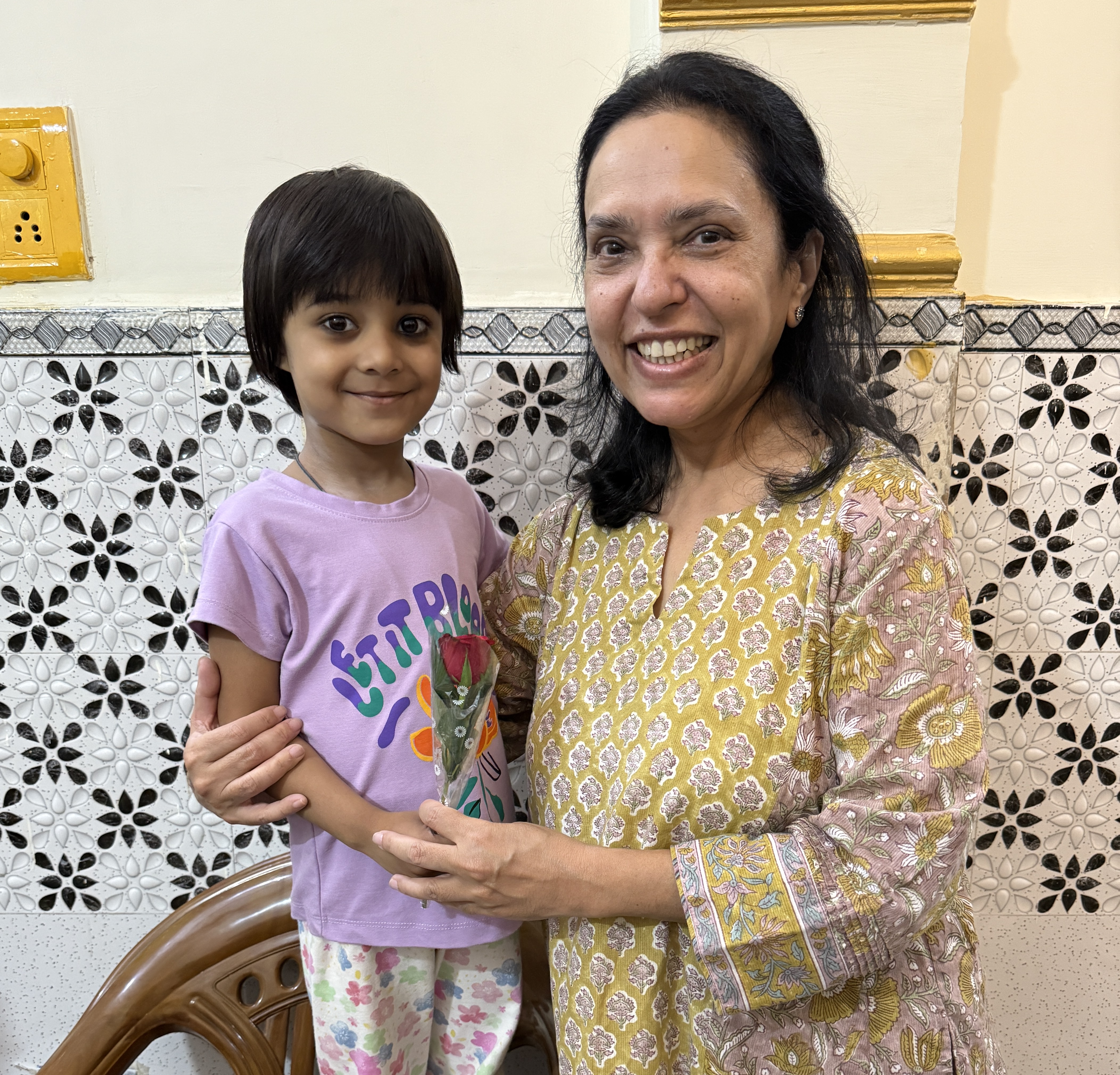
The smile on the face of little Aliya when I met her on my visit to Trilokpuri in September this year. FFEC helped her procure an ID card and open a bank account so that she could get enrolled in school. This impacted the entire family – due to the family’s below poverty line status she automatically started receiving money from the government, plus additional money for being a girl-child.
So many people don’t even know that they can avail benefits from the government schemes they are entitled to as citizens. Having an ID card opened so many doors for not just her but her entire family. Imagine how many families’ futures we can change!
Q: FFEC works across health, education, legal identity, and adolescent empowerment. What connects all these efforts?
At the heart of every project, be it Buniyaad, Kadam, Raah, Pehchan, is the same idea which is that every human being wants to belong, contribute, and feel in control of their own life.
Women want to protect their children. Teenagers want to be heard. Families want documents so they can access rights. Children want to learn and stay in school.
We aren’t “fixing problems.” We are expanding the possibilities that already exist within people. Our work is about clearing the path so their strength can move freely and lead a life of dignity..
Q: What question keeps you up at night. Share the one that pushes FFEC’s work forward?
How can FFEC contribute to reducing the growing inequality?
The top 10% of the Indian population holds 77% of the total national wealth according to Oxfam’s 2025 report. There are 119 billionaires but 35% of children below 5 are stunted. Many don’t go to school or dropout early. The sheer injustice of this is what inspired me to quit my well paying corporate job in the Silicon Valley and start working in the slums of Trilokpuri.
We strive to empower vulnerable communities with the knowledge and tools to reduce this gap, to provide them access to better education, health and opportunities that can make them equal citizens.
These questions are not theoretical. They are realities we meet every day. They are reminders that inequality is not abstract, it is lived. And that we cannot look away.
Q: Much of FFEC’s work centers on dignity. How do you define dignity in this context?
Dignity is the feeling a woman has when she can ask a question without fear. When she knows she has the right to information and the right to make decisions. Dignity is a father walking into a documentation camp knowing he will leave with a birth certificate for his child, not humiliation. Dignity is a mother tracking her child’s growth and understanding what the numbers mean.
Dignity is belonging. Belonging is power. Dignity is self respect. Not depending on others for money. Being able to define your own future.
Q: From your visits, what have you learned from the families FFEC walks alongside?
I have learned that resilience is not loud or dramatic. It is quietly persistent.
I have met women who wake up before sunrise, finish domestic work, go to wage labor, return home to cook, and still make time to attend a literacy class.
I have seen children study under streetlights, refusing to let circumstances dictate their dreams.
I have watched adolescents navigate social pressures and still show up, week after week, to learn and search for new ways to express themselves.
I have seen how given an opportunity, youth and women have become leaders in their community, inspiring their next generation to become leaders.
People don’t lack ambition. They lack opportunity. And when opportunity is offered with respect, people always rise to meet it.
Q: What surprised you most this year?
Honestly, it was our Annual Fundraiser in the Bay Area. I walked into the room and saw over 200 people gathered. Not out of obligation, but out of genuine belief in the families we serve. The energy of the room was incredible.
Our youth volunteers, some barely teenagers, were leading with such purpose and sincerity. They weren’t there for hours or credit, they truly cared.
And the generosity moved me. People didn’t just attend. They gave, wholeheartedly. Together, we raised more than $90,000 in one night.