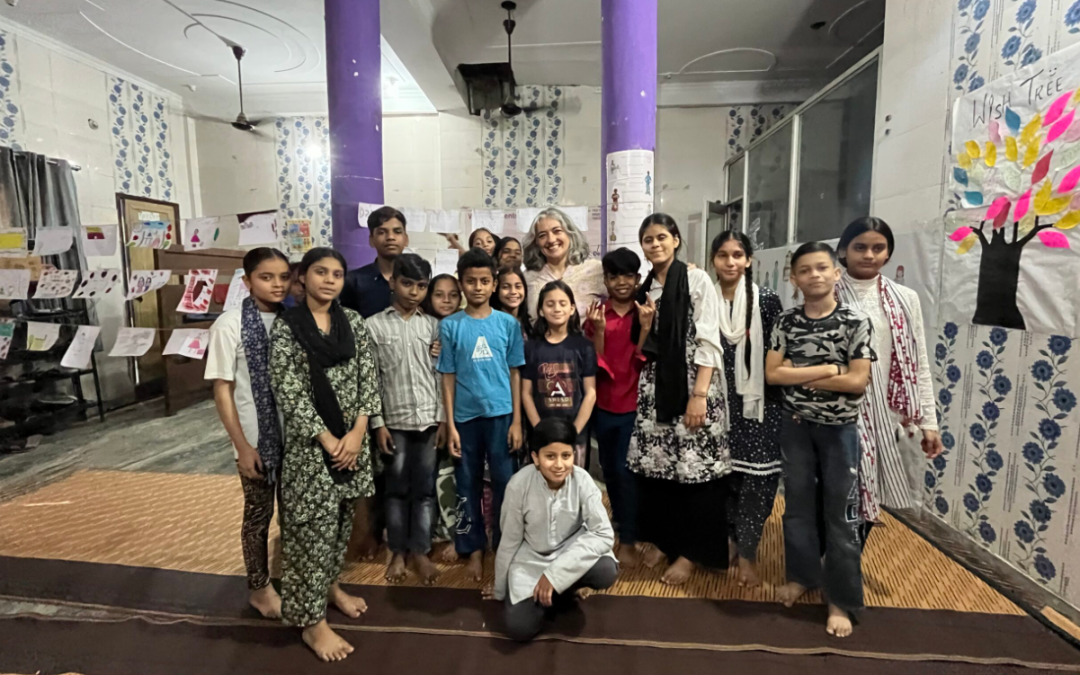
At FFEC, we believe that creativity is a powerful way to nurture emotional intelligence, build community, and empower young minds. In a 5-day workshop led by artist and storyteller Ms Samina, a group of 24 children between the ages of 10 and 15 explored deep themes like equality, identity, pain, friendship, and belonging all through the expressive tools of storytelling, poetry, art, and discussion.
Day 1 – Understanding Discrimination Through Stories and Shared Voices
The workshop began with a simple yet thought-provoking story titled “The King and the Common Man” by K.G. Subramanyan. Through creative narration, Samina ji introduced the children to ideas of power, courage, and wisdom inviting them to think about what makes someone truly strong.
A reflective conversation followed where children shared personal experiences of discrimination such as feeling judged for wearing a headscarf and moments when they felt equal, like sharing lunch with friends from diverse backgrounds. The openness in the room set the tone for the rest of the workshop.
Later, in small groups, children collaborated on a poetry activity beginning with the line, “Mujhe ghair-barabari kaehsaas hota hai jab…” (I feel discriminated against when…). Each child contributed a line, weaving together collective stories of exclusion and empathy. The poetry was read aloud, sparking meaningful dialogue and a sense of shared understanding.
Day 2 – Friendship in Colour and Metaphor
The second session featured the animated film Mukund and Riyaz by Nina Sabnani, a poignant story of childhood friendship amidst the chaos of Partition. The children were visibly moved by the story’s message of love, loss, and unity beyond religious divides.
In response, they were asked to fill a large sheet with colours they would dedicate to friendship an activity that transformed emotions into vibrant expressions. This led into a lesson on metaphors and how they can beautifully capture our relationships. Children wrote personal metaphors about friendship like comparing a friend to the moon or a tree and shaped them into creative forms using newspaper cuttings. These artworks became deeply personal pieces of expression, combining poetry and visual art.
Day 3 – Listening to Belonging
The third day focused on listening and imagination. Ms Samina introduced the concept of podcasts and played an episode from her own series, Hum Hindustani. Children were asked to close their eyes and simply listen.
The podcast, which revolved around the idea of “mere log” (my people), sparked emotional reactions. The children found themselves reflecting on who their people are family, friends, neighbors and how these connections shape their sense of self.
They were then invited to write their own poems on the theme of belonging, using a guided format. When they shared their poems with the group, what emerged were heartfelt words filled with warmth, memories, and pride testimony to the power of sound and silence in unlocking emotion.
Day 4 – Drawing Through Pain
This session delved into the complex terrain of emotional and physical pain. Ms Samina narrated her own published story titled Where Does It Hurt?, prompting the children to reflect on moments when they had felt hurt and what helped them heal.
Each child received a blank sheet to draw a scene in which they experienced pain, making sure to include themselves in the artwork. These were not just drawings they were visual stories of vulnerability and resilience. As the children shared the meaning behind their pieces, the room filled with empathy, understanding, and often, comfort.
Day 5 – Celebration, Reflection, and Connection
The final day was dedicated to exhibition and reflection. With support from the FFEC team, an exhibition was curated to showcase the incredible work created over the past sessions. Artwork from each day was displayed in sequence, forming a visual timeline of growth, self-expression, and mutual respect.
As they walked through the exhibition, children were encouraged to respond to three reflective questions:
1. Which artwork (not their own) did they like the most and why?
2. What did they see in someone else’s work that sparked a new idea?
3. Which artwork felt most personally relatable?
These reflections encouraged deeper observation and appreciation for each other’s creativity. A feedback wall captured their final thoughts, closing the workshop on a note of gratitude, wonder, and discovery.
What the Children Had to Say
Throughout the workshop, the children expressed themselves through vibrant visuals, poetic metaphors, and thoughtful conversations. Themes of fairness, pain, friendship, resilience, and self-worth surfaced across their work. They listened to each other, learned from each other, and grew together.
Some of their reflections said it all:
“Humein barabri aur gher-barabari ke baare mein jaanneko mila,” said Zoya, who appreciated learning about equality and discrimination.
“Nayi nayi cheezen seekhne ko mili,” shared Ilma, delighted by the new concepts and creative tools she explored.
“Jo cheezen humein nahi pata tha, unhe jaanne ka aurkarne ka mauka mila,” said Nizba, reflecting on the joy of discovery and new experiences.
Conclusion
This workshop wasn’t just about art it was about belonging, listening, empathy, and imagination. It offered the children a safe space to express who they are and how they feel, and to see their stories reflected in those around them. Through the powerful combination of stories, creativity, and reflection, these young participants walked away with a deeper understanding of themselves and the world around them.
At FFEC, we’re proud to nurture such spaces of growth.